Freelance contract types explained: protect your work & get paid

Freelance contract types explained: protect your work & get paid
Picking the wrong contract type is one of the most expensive mistakes a freelancer can make. 47% of freelancers faced payment delays or disputes in 2026, with 52% experiencing average delays of 14 days or more. That is not just an inconvenience. It is a cash flow crisis. The good news is that the right contract, chosen and written carefully, can prevent most of these problems before they start. This article breaks down every major freelance contract type, explains when to use each one, and shows you exactly what to watch out for so you can work confidently and get paid on time.
Table of Contents
How to evaluate freelance contracts: Key criteria
Project-based (fixed-price) vs. hourly contracts
Retainer agreements and Master Service Agreements (MSA)
Specialty agreements: NDAs, work-for-hire, and license contracts
Common pitfalls and negotiation tips for freelance contracts
Why one-size-fits-all contracts rarely protect freelancers
Create bulletproof contracts easily with LexFlow
Frequently asked questions
Key Takeaways
Point | Details |
|---|---|
Choose the right type | Match contract structure (fixed, hourly, retainer, MSA) to project goals and risk tolerance. |
Protect your payment | Always require deposits, milestone payments, and clear deliverables to avoid delays or disputes. |
Safeguard your IP | Define IP ownership, transfer timing, and confidentiality terms clearly for every client. |
Avoid template traps | Even small contract tweaks can prevent major problems—never use generic terms without review. |
How to evaluate freelance contracts: Key criteria
Before you can choose the right contract type, you need to know what a strong contract actually does for you. Not all agreements are created equal, and some standard templates leave dangerous gaps.
Here are the core criteria every freelance contract should address:
Payment predictability: When do you get paid, how much, and what triggers each payment?
Scope clarity: What exactly are you delivering, and what falls outside the agreement?
IP rights: Who owns the work once it is done, and when does ownership transfer?
Dispute resolution: If something goes wrong, what is the process for resolving it?
Flexibility: Can the scope or timeline change, and if so, how is that handled?
Liability limits: How much are you on the hook for if something goes wrong?
Common pitfalls show up in predictable places. Vague scope leads to creep, unlimited liability exposes you to outsized risk, non-competes without end dates can block future work, and missing termination or kill fee clauses mean you could walk away unpaid if a client cancels early.
Red flags to watch for in any contract include unlimited liability clauses, no mention of late payment fees, and no cap on revision rounds. These are not minor oversights. They are leverage points that clients can and do use.
Pro Tip: Always require a deposit before starting any project, and put payment terms, revision limits, and kill fees in writing. Verbal agreements do not hold up when disputes arise. Strong legal protections in contracts are your first line of defense.
Project-based (fixed-price) vs. hourly contracts
Once you know your priorities, it is time to compare the two most-used freelance contract structures. These are the contracts most clients will expect, so understanding their trade-offs is essential.
Fixed-price contracts work best when the deliverables are clearly defined. You agree on a scope, set a total fee, and often break payments into milestones. Fixed-price contracts suit defined deliverables with clear endpoints, using milestones that release payment after client approval or a 14-day auto-release. This structure protects you from scope creep and gives clients a predictable budget.
Hourly contracts are better when the scope is fluid or evolving. You track your time and bill for every hour worked. Hourly contracts suit ongoing or undefined work, with payment for tracked hours via desktop apps. Notably, 60% of Upwork jobs are fixed-price and 40% are hourly, which tells you something about what clients prefer.
Feature | Fixed-price | Hourly |
|---|---|---|
Best for | Defined projects | Evolving or ongoing work |
Payment trigger | Milestones or completion | Hours logged |
Scope risk | Creep if not defined tightly | Naturally flexible |
Client preference | More common (60%) | Less common (40%) |
Income predictability | High | Variable |
Both structures have real weaknesses. Fixed-price contracts can trap you if the scope expands without a change order process. Hourly contracts can drag on without clear boundaries, making it hard to close out a project.
Pro Tip: For fixed-price work, require 25 to 50% upfront and tie remaining payments to specific milestones. For hourly work, agree on a weekly billing cycle and a maximum hours cap to protect payments with contracts and avoid billing surprises.
Retainer agreements and Master Service Agreements (MSA)
If you work with clients long-term or want a steady monthly income, these contract types can change the game. They are more complex to set up but far more powerful for ongoing relationships.

Retainer agreements give you a guaranteed monthly fee in exchange for consistent availability or a set number of hours. Retainer agreements provide monthly fees for consistent availability, making them ideal for ongoing support roles like monthly social media management, technical support, or content writing.
Master Service Agreements (MSAs) take a different approach. Instead of defining one project, an MSA sets the overall terms of your working relationship with a client. MSAs set general terms covering IP, payment, and liability for long-term clients, with individual Statements of Work (SOWs) defining each project’s scope, deliverables, and timelines. This saves enormous time once the relationship is established.
Feature | Retainer | MSA with SOW |
|---|---|---|
Income stability | High (fixed monthly) | Moderate (per project) |
Flexibility | Low to moderate | High |
Setup complexity | Moderate | Higher upfront |
Best for | Ongoing recurring work | Multi-project relationships |
Scope management | Defined availability | Per-SOW scope |
Retainers are excellent for predictable income but require careful definition of what “availability” actually means. Does it mean you respond within 24 hours? That you reserve a set number of hours per week? Leaving this vague is a common mistake.
Pro Tip: In retainer agreements, always cap your liability at the total fees paid under the agreement and define availability in concrete, measurable terms. This prevents misunderstandings that can sour a long-term client relationship.
Specialty agreements: NDAs, work-for-hire, and license contracts
Beyond core contract types, freelancers should also use specialty agreements for information security and IP clarity. These documents often get skipped, and that is where real problems start.
Non-Disclosure Agreements (NDAs) protect confidential information shared during a project. NDAs protect confidential info and are often signed before a project begins, especially when a client shares sensitive business data, trade secrets, or unreleased product details. Push for mutual NDAs so your own methods and processes are also protected.
Work-for-hire agreements mean the client owns the final work completely once payment is made. This is standard in many industries but carries a critical nuance: IP transfers only post-full payment. Do not hand over final files until the last invoice clears.
License agreements let you keep ownership of the work while granting the client specific rights to use it. This is powerful for photographers, illustrators, and writers who want to retain long-term control over their creative output.
Steps to protect your IP and confidentiality on every project:
Sign an NDA before sharing or receiving any sensitive information.
Specify in writing whether the contract is work-for-hire or a license.
Define exactly when IP ownership transfers (after final payment, not before).
Include your independent contractor status explicitly to avoid misclassification.
Add a dispute resolution clause requiring mediation before any court action.
“Always clarify IP transfer timing in your contract. Handing over files before full payment, without a written agreement, is one of the most common ways freelancers lose leverage.”
Common pitfalls and negotiation tips for freelance contracts
Even with the best contract type, fine print and details can make or break your protection. Seasoned freelancers get caught out too, usually because they rush the paperwork when a project feels exciting.
Watch for these red flags in any contract a client sends you:
Undefined or loosely defined scope
No kill fee if the client cancels early
Non-compete clauses without clear end dates or geographic limits
Unlimited liability provisions
No mention of late payment fees or interest
Vague scope leads to scope creep, unlimited liability exposes you to serious financial risk, and missing kill fee clauses mean you could do weeks of work and walk away with nothing if a client pulls out.
Never start work without a signed agreement and a deposit in your account. This is not about distrust. It is about professionalism and self-protection.
When negotiating, focus on these terms:
Late payment fees: Require 1 to 1.5% per month on overdue invoices, plus deposits of 25 to 50% upfront.
Revision limits: Cap revisions at 2 to 3 rounds explicitly. Unlimited revisions are a hidden cost.
Termination clauses: Define what happens if either party ends the agreement early.
Deliverable definitions: Be specific. “A website” is not a deliverable. “A five-page responsive website with the features listed in Exhibit A” is.
Pro Tip: Use plain-language templates and walk clients through key terms before signing. When clients understand what they are agreeing to, disputes drop significantly. You can avoid common freelance contract mistakes by starting with a well-structured template and customizing from there.
“The best contract is one both parties actually read and understand. Complexity does not equal protection.”
Why one-size-fits-all contracts rarely protect freelancers
Here is something most contract advice skips over: generic templates are a starting point, not a finish line. The freelance community has normalized downloading a free template and sending it out unchanged, and that habit quietly costs people money every year.
Standard templates almost never include kill fees tailored to your project size. They rarely specify when IP transfers in relation to payment. They often omit revision caps entirely. These are not obscure legal details. They are the exact clauses that decide whether you get paid when a client ghosts you mid-project.
Platform contracts from Upwork or Fiverr are not a substitute either. They protect the platform first. Your specific deliverables, your working style, and your liability exposure are not their concern.
The fix is not hiring a lawyer for every project. It is building a base contract that reflects how you actually work and then making small, deliberate adjustments per client. Change the scope definition. Adjust the revision rounds. Specify the IP transfer date. These tweaks take minutes and can save you thousands.
We have seen freelancers lose rights to work they created simply because a contract said “upon delivery” instead of “upon receipt of final payment.” One phrase. Enormous difference. Customize your legal agreements to match each project, and you will almost never face that situation.
Create bulletproof contracts easily with LexFlow
Ready to avoid contract headaches for good? LexFlow gives freelancers and small business owners the tools to create and sign legal contracts in minutes, without needing a lawyer on speed dial.
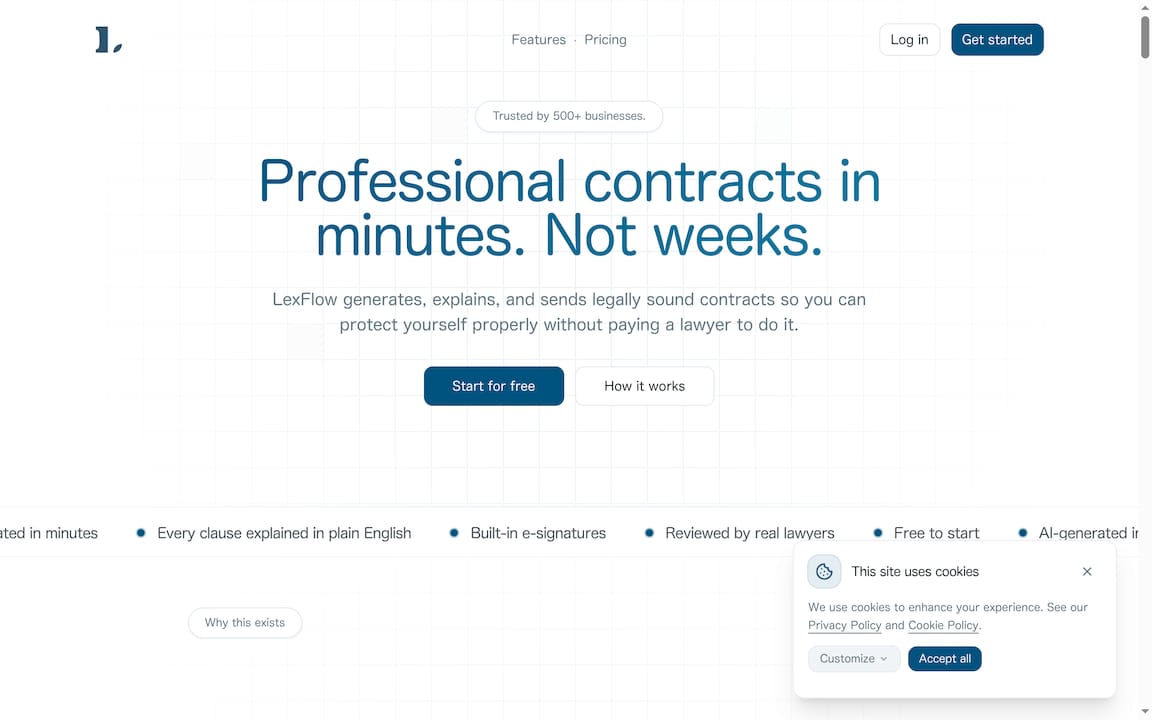
Every contract generated through LexFlow comes with plain-English explanations of each clause, so you know exactly what you are agreeing to and why it matters. Choose from our legal contract templates covering freelance agreements, NDAs, work-for-hire, retainers, and more. Built-in e-signatures, secure document storage, and AI-driven customization mean you can go from draft to signed in the same afternoon. Stop losing money to vague agreements and start every project on solid legal ground.
Frequently asked questions
What contract type is safest for new freelancers?
Fixed-price contracts with milestones offer the most certainty for new freelancers because payment is tied to specific, approved deliverables rather than hours or availability.
Do I need both an MSA and SOW for every client project?
You only need a Master Service Agreement if you will work with a client repeatedly. For each new project under that relationship, add a separate Statement of Work defining scope, deliverables, and timelines.
How can I protect myself from late payment or non-payment?
Include deposits of 25 to 50% upfront, milestone payments, late fees of 1 to 1.5% per month, and clear deliverable definitions. These terms alone address the majority of the payment delays freelancers face.
What’s the difference between work-for-hire and a license agreement?
Work-for-hire transfers full ownership to the client upon payment, while a license agreement lets you keep rights to the work and grants the client specific, defined usage only.