Legal checklist for freelancers: protect your work and get paid

Legal checklist for freelancers: protect your work and get paid
TL;DR:
Writing a detailed contract is essential to ensure fair payment, clear scope, and IP rights protection.
Freelancers must handle taxes carefully by setting aside income, paying estimated taxes, and understanding reporting thresholds.
Proper business structure, such as forming an LLC, and using affordable legal tools help manage risks and ensure compliance.
Skipping a written contract is the single most expensive mistake a freelancer can make. One vague email agreement can cost you thousands in unpaid invoices, stolen work, or a client who keeps adding tasks without paying more. The good news is that protecting yourself legally does not require a lawyer on retainer or a law degree. This checklist walks you through the five most critical legal areas every freelancer needs to address, from contract basics to tax compliance, business structure, and affordable tools that keep you covered without draining your budget.
Table of Contents
1. Essential contract components: What every freelancer agreement needs
2. Tax compliance for freelancers: Avoiding IRS penalties
3. Classification & compliance: Staying on the right side of the law
4. Business setup & risk management: Protecting yourself and your assets
5. Affordable legal solutions: Tools, templates, and when to seek help
Our take: Why a legal checklist is your freelance safety net
Create your custom contract in minutes with LexFlow
Frequently asked questions
Key Takeaways
Point | Details |
|---|---|
Written contracts matter | A clear, written agreement protects your rights and helps ensure you get paid. |
Stay IRS compliant | Know your tax obligations and keep good records to avoid expensive mistakes. |
Build business protection | Consider an LLC and insurance to reduce personal risk as your freelance business grows. |
Use the right legal tools | Affordable templates and e-signatures save time and money while keeping you compliant. |
Checklist = safety net | A legal checklist keeps you organized, confident, and focused on your freelance work. |
1. Essential contract components: What every freelancer agreement needs
Every freelance project starts with a handshake, but handshakes do not hold up in court. A written contract is your single most powerful tool for getting paid, keeping your work, and setting clear expectations before a project begins. If you are not sure which agreement fits your situation, reviewing the different contract types for freelancers can help you pick the right starting point.
Key contract mechanics include detailed deliverables, payment schedules, IP transfer clauses, and kill fees. These are not optional extras. They are the foundation of a contract that actually protects you.
Here is what every freelancer agreement should include:
Deliverables and deadlines: Describe exactly what you will produce and when. Vague language like “website design” invites disputes. Say “five-page website with homepage, about, services, contact, and blog, delivered by March 15.”
Payment schedule: Require at least 50% upfront for new clients. Spell out due dates, accepted payment methods, and late fees (typically 1.5% per month).
Scope of work and scope creep clause: State clearly what is out of scope. Any additional work beyond the agreed deliverables requires a written change order and additional payment.
IP ownership: Specify who owns the work during the project and after final payment. Many freelancers retain ownership until the invoice is paid in full.
Kill fee: If a client cancels mid-project, a kill fee (usually 25 to 50% of the remaining balance) compensates you for your time.
Pre-existing work: Retain rights to any tools, code, designs, or processes you bring into the project. Only license what the client actually needs.
Making sure those signatures are valid matters just as much as the content. Understand legally binding signatures before you send your next agreement.
Pro Tip: Never start work based on a verbal agreement or a casual email thread. Even a one-page written contract signed by both parties gives you legal standing that a text message never will.
2. Tax compliance for freelancers: Avoiding IRS penalties
Once your contract is rock solid, the next most common legal pitfall is mishandling taxes. Freelancers are not employees, which means no one withholds taxes for you. That responsibility falls entirely on your shoulders.
The self-employment tax rate is 15.3%, covering both Social Security (12.4%) and Medicare (2.9%). You pay this on top of your regular income tax. If you expect to owe more than $1,000 in taxes for the year, the IRS requires you to pay quarterly estimated taxes, due in April, June, September, and January.
Starting in 2026, clients must issue a 1099-NEC form for any freelancer they pay $2,000 or more during the year. This is a change from the previous $600 threshold, but do not let it lull you into thinking smaller payments are invisible to the IRS. You are required to report all income regardless of whether you receive a form.
Tax obligation | Key detail |
|---|---|
Self-employment tax | 15.3% of net self-employment income |
Quarterly payments | Required if you owe more than $1,000 |
1099-NEC threshold (2026) | Payments of $2,000 or more |
Deductible expenses | Home office, equipment, software, health insurance |
For contract compliance and tax purposes, keep a separate business bank account. It makes tracking income and expenses dramatically simpler.
Pro Tip: Set aside 25 to 30% of every payment into a dedicated savings account the moment it lands. Treat it like it was never yours. This habit alone prevents the most common freelancer tax crisis.
3. Classification & compliance: Staying on the right side of the law
Tax paperwork aside, freelancers must also watch out for how they are classified by clients and the IRS. Being misclassified as an employee instead of an independent contractor can trigger back taxes, penalties, and even forced reclassification.
The IRS classification rules use three categories of tests: behavioral (does the client control how you work?), financial (do you set your own rates and use your own tools?), and relationship (is there a written contract affirming contractor status?). Failing these tests puts both you and your client at risk.
Over 70 million Americans now work as freelancers, and IRS audit focus on worker misclassification is growing. A simple contract clause can make the difference between contractor status and a costly reclassification.
Here is a checklist of contract clauses that protect your independent contractor status:
State explicitly that you are an independent contractor, not an employee.
Confirm that you control the methods and means of completing the work.
Specify that you may work for other clients simultaneously.
Confirm that you supply your own tools and equipment.
Include a clause that no benefits, withholding, or employment relationship is created.
Beyond the contract, keep these documents on file:
Signed contractor agreements for every client
Invoices showing your rates and payment terms
Records of other clients you worked with during the same period
Any written communications that confirm your independent status
Good contract management tips make this kind of recordkeeping much less painful. A simple folder system or a digital vault keeps everything accessible if you ever need to prove your status.
4. Business setup & risk management: Protecting yourself and your assets
Sound contracts and tax awareness are strong, but freelancers should also build long-term business security. The right business structure can shield your personal assets from client disputes, lawsuits, or unpaid debts.
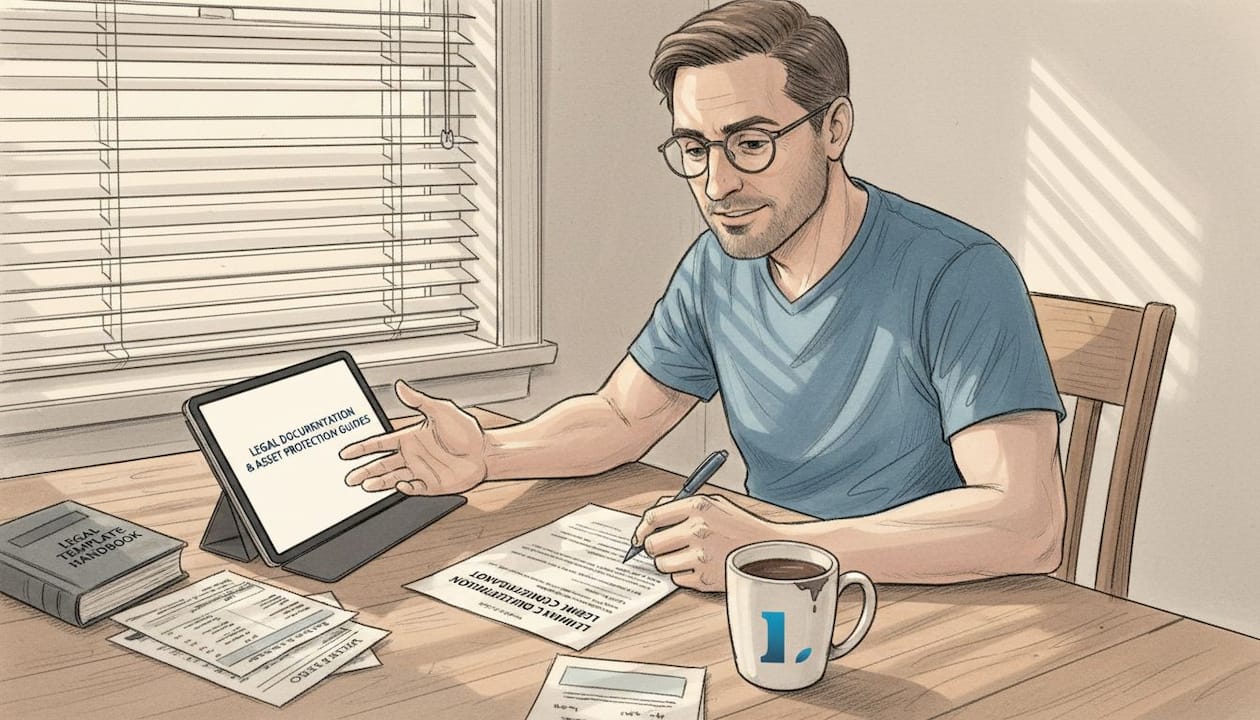
Forming an LLC offers liability protection, requires you to obtain an EIN (Employer Identification Number), and means you should maintain records for at least seven years. It also signals professionalism to clients.
Factor | Sole proprietor | LLC |
|---|---|---|
Personal liability | Full exposure | Protected |
Setup cost | Minimal | $50 to $500 depending on state |
Tax filing | Schedule C | Schedule C or separate return |
Paperwork | Minimal | Annual reports required |
Client perception | Informal | Professional |
Key steps to set up your freelance business properly:
Get an EIN: Free from the IRS website. Use it instead of your Social Security number on contracts and invoices.
Register locally: Check your city or county for business license requirements. Many jurisdictions require a basic license even for home-based freelancers.
Consider insurance: Professional liability (errors and omissions) insurance protects you if a client claims your work caused them financial harm.
Open a business bank account: Keeps personal and business finances separate, which matters for taxes and legal protection.
For practical starting points, explore freelancer legal templates that align with your business structure.
Pro Tip: LLC registration services online can handle the paperwork for as little as $0 plus state fees. You do not need a business attorney for a straightforward single-member LLC.
5. Affordable legal solutions: Tools, templates, and when to seek help
With legal and business structure sorted, freelancers still need ongoing, affordable ways to stay protected and adapt to different job types. The good news is that the legal tech landscape has made solid protection genuinely accessible.
Affordable legal tools like Rocket Lawyer, LegalZoom, and ZenBusiness offer templates and attorney review options at a fraction of traditional legal costs. These platforms work well for standard freelance agreements, NDAs, and basic service contracts.
Here is when to use each approach:
Use a template for routine projects under $5,000, standard service agreements, and repeat client work where the relationship is already established.
Use an AI-powered platform for customized contracts that need jurisdiction-specific language, plain-English clause explanations, or built-in e-signatures.
Hire an attorney for high-value deals (over $25,000), complex IP licensing, equity arrangements, or any agreement involving sensitive data or regulated industries.
Free and low-cost resources worth bookmarking:
IRS Free File and the IRS self-employed tax center
Your state bar association’s lawyer referral service (often free 30-minute consultations)
SCORE (free mentoring and legal workshops for small businesses)
Legal Q&A forums like Avvo for quick, non-binding guidance
One critical warning: if you work with clients in California or New York, check state-specific freelance protection laws. California’s AB5 and New York’s Freelance Isn’t Free Act impose specific contract requirements that go beyond federal standards. Always review contracts for freelancers with these state rules in mind.
Our take: Why a legal checklist is your freelance safety net
Most freelancers wait until something goes wrong before they think about legal protection. A client ghosts them after delivery. A scope dispute turns ugly. An IRS notice arrives out of nowhere. By then, the cost of fixing the problem is ten times higher than preventing it would have been.
Here is what we have seen consistently: a checklist beats a one-size-fits-all contract template every single time. Why? Because every project is different. A logo design for a startup carries different IP stakes than a ghostwriting project for a public figure. A checklist forces you to think through each situation rather than copy-paste and hope for the best.
We also believe that why contract review matters is not just a legal question. It is a business discipline. Freelancers who treat legal prep as a routine part of every project close deals faster, get paid more reliably, and project the kind of professionalism that attracts better clients.
You do not need to spend thousands to get 90% of the protection a large business has. A few well-chosen steps, applied consistently, deliver most of the value. Start with the contract. Add the tax habit. Build the structure over time.
Create your custom contract in minutes with LexFlow
Putting this checklist into practice does not have to be complicated or expensive. LexFlow gives freelancers AI-powered contract generation that produces legally sound, plain-English agreements in minutes, tailored to your project type and jurisdiction.
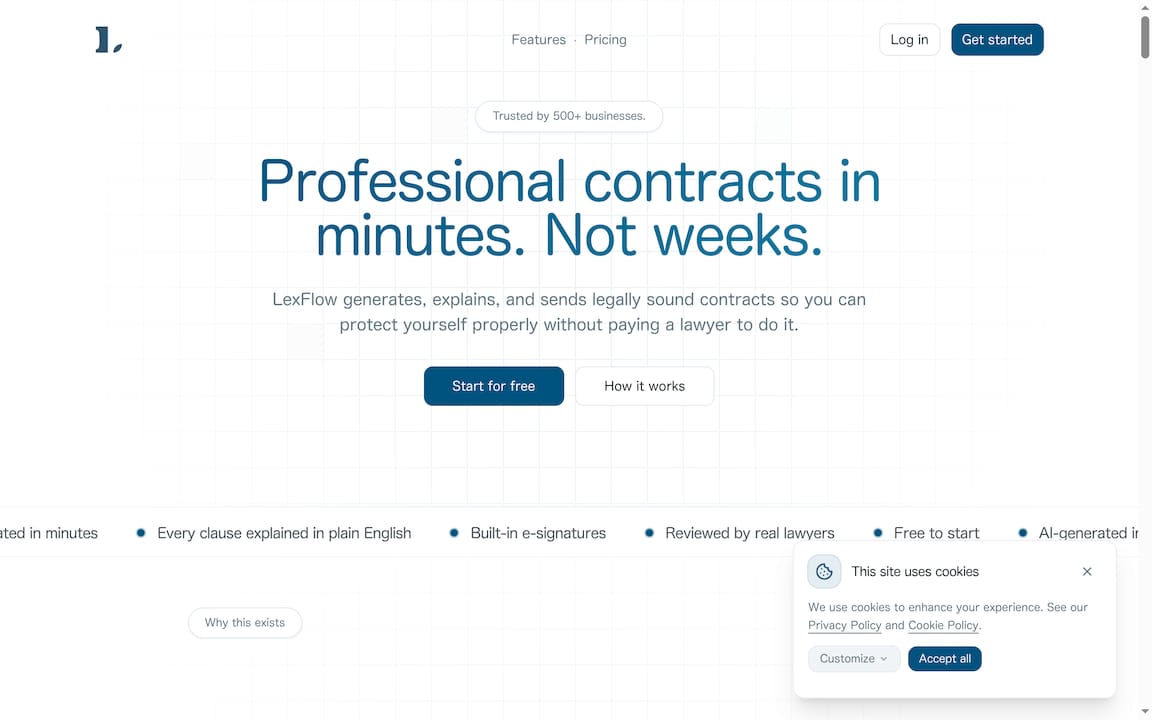
You can create a freelancer contract using ready-made templates or by uploading your own documents, then get a clear explanation of every clause before you sign. Built-in e-signatures mean you go from draft to signed in one workflow, with everything stored securely. No legal jargon. No expensive lawyers. Just solid protection that fits your budget. Review the full legal contract details to understand exactly what you are getting before you commit.
Frequently asked questions
What are the top mistakes freelancers make with contracts?
The biggest mistakes are skipping written agreements, leaving out clear payment terms, and failing to address IP ownership. Any one of these gaps can cost you a project’s worth of income.
How often should freelancers update their contracts?
Review and update your contracts at least once a year, or whenever you change your services, raise your rates, or start working with clients in a new state. DIY templates work for simple jobs, but high-stakes agreements deserve a professional review.
Do freelancers need an LLC to be protected?
An LLC offers meaningful liability protection, but it is not required to start. Many freelancers begin as sole proprietors and form an LLC once their income and client base grow enough to justify the setup cost.
What new IRS changes impact freelancers in 2026?
Starting in 2026, clients must issue a 1099-NEC for payments of $2,000 or more, up from the previous $600 threshold. The self-employment tax rate stays at 15.3%.
When should a freelancer consult an attorney instead of using a template?
Use a template for small, routine projects. For complex, high-value, or sensitive deals, high-stakes agreements need a licensed attorney to review the terms before you sign.